prenatal vitamin requirements
Navigating pregnancy requires clear, science-backed nutritional guidance. Meeting your daily prenatal vitamin requirements is one of the most effective ways to support fetal growth while protecting maternal health throughout every stage of gestation.
According to guidelines established by the American College of Obstetricians and Gynecologists (ACOG), the Centers for Disease Control and Prevention (CDC), and the National Institutes of Health (NIH), meeting specific daily targets for nutrients like folic acid, iron, calcium, vitamin D, and omega-3 fatty acids helps prevent serious birth defects, maternal anemia, and long-term skeletal depletion.
Understanding how your Prenatal vitamin requirements shift across each trimester allows you to make informed decisions about diet, supplementation, and daily wellness.
How Prenatal Vitamin Requirements Shift by Trimester
Nutritional demands are dynamic. As your baby develops from a microscopic cluster of cells into a full-term newborn, your body’s daily micronutrient priorities evolve.
1. First Trimester: Neural Tube Formation & Cell Division
In early pregnancy, folic acid leads the list of critical nutrients. The neural tube—which eventually forms your baby’s brain and spinal cord—closes within the first 28 days of conception, often before a woman even knows she is pregnant.
-
The Goal: Taking 400 to 800 micrograms (mcg) of folic acid daily reduces the risk of major neural tube defects, such as spina bifida and anencephaly, by up to 70%.
-
Timing: The CDC strongly advises starting folic acid supplementation at least one month prior to conception.
2. Second Trimester: Blood Volume Expansion & Tissue Growth
As the placenta fully develops and maternal blood volume expands by nearly 50%, iron requirements rise dramatically.
-
The Goal: Expecting mothers require 27 milligrams (mg) of elemental iron per day. Iron produces the extra hemoglobin needed to supply oxygen throughout the body and to the placenta.
-
Absorption Tip: Look for prenatal formulations that combine iron with Vitamin C to double non-heme iron absorption in the gut.
3. Third Trimester: Skeletal Mineralization & Brain Growth
During the final months, fetal skeletal development accelerates rapidly, depositing up to 250 mg of calcium into baby’s bones each day. Simultaneously, neural tissue growth peaks.
-
The Goal: 1,000 mg of calcium combined with 600 to 800 IU of Vitamin D ensures proper bone mineralization without leaching calcium from maternal bones.
-
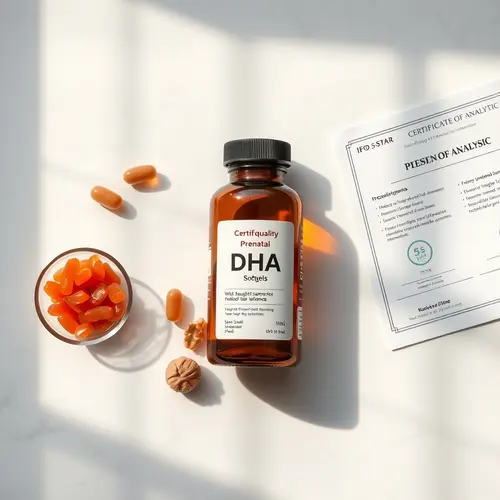
Brain Support: 200 to 300 mg of DHA (omega-3) daily supports rapid central nervous system and retinal development.
Prenatal vitamin requirements – Key Nutrients, Daily Amounts, and Primary Functions
The table below outlines the essential prenatal vitamin requirements, recommended daily allowances (RDA), top food sources, and core functions:
| Nutrient | Recommended Daily Amount | Top Dietary Sources | Primary Role in Pregnancy |
| Folic Acid / Folate | 400–800 mcg DFE | Fortified cereals, dark leafy greens, lentils | Prevents neural tube defects and supports early cell division |
| Iron | 27 mg | Lean red meat, poultry, spinach, lentils | Supports blood volume expansion; prevents maternal anemia |
| Calcium | 1,000 mg | Dairy products, tofu, fortified plant milks | Builds fetal bones and teeth; protects maternal bone density |
| Vitamin D | 600–800 IU | Fatty fish (salmon), fortified milk, egg yolks | Facilitates intestinal calcium absorption; aids immunity |
| Omega-3 DHA | 200–300 mg | Wild salmon, sardines, algae-based oil | Drives fetal brain, nerve, and visual development |
| Choline | 450 mg | Whole eggs (yolks), chicken, soybeans | Supports early brain structure and spinal cord health |
| Iodine | 220 mcg | Iodized salt, dairy products, eggs | Regulates maternal and fetal thyroid function |
Prenatal vitamin requirements: Dietary Foundation vs. Supplementation
Whole foods remain the primary building block of a healthy prenatal plan. Leafy greens, legumes, lean proteins, nuts, and fortified grains provide complex fiber and co-factors that maximize nutrient utilization.
However, modern dietary patterns often fall short of meeting elevated pregnancy demands—particularly for iron, folate, and DHA. A high-quality prenatal multivitamin acts as a reliable safety net to bridge these nutritional gaps.
When selecting a supplement, check product labels against established clinical standards to ensure adequate levels of essential vitamins without excessive doses.
Prenatal vitamin requirements Warning: The Dangers of Preformed Vitamin A Overload
While meeting your daily targets is vital, taking higher amounts of certain nutrients is not always safer. High doses of fat-soluble vitamins can accumulate in tissues and pose serious developmental risks.
Clinical Practice Note:
In my years counseling families, I have seen cases where well-meaning parents overload on high-dose supplements without realizing their potential toxicity. One client presented at 12 weeks of gestation with elevated liver enzymes after taking high-dose cod liver oil daily, seeking extra Vitamin D. She was unaware that high concentrations of preformed Vitamin A (retinol) can be teratogenic, increasing the risk of congenital malformations.
We immediately transitioned her to a standard prenatal vitamin containing beta-carotene (a safe provitamin A source that the body only converts as needed) and monitored her labs, which normalized within weeks. This example underscores why matching your supplement choice to evidence-based prenatal vitamin requirements matters far more than simply “taking extra vitamins.”
5 Practical Rules for Prenatal vitamin requirements
-
Start Before Conception: Begin taking a standard prenatal supplement containing at least 400 mcg of folic acid before trying to conceive to protect early neural development.
-
Take Vitamins with Meals: Consume your daily prenatal supplement alongside a meal or light snack containing healthy fats to reduce morning nausea and enhance fat-soluble vitamin absorption.
-
Avoid Exceeding Established Limits: Never take additional single-nutrient mega-doses alongside your prenatal multivitamin unless specifically instructed by your obstetrician.
-
Discuss Herbal Additives: Consult your healthcare provider before taking any herbal remedies, green powders, or unverified prenatal teas, as many ingredients lack safety data for pregnancy.
-
Re-evaluate Intake Every Trimester: Discuss blood work results—such as ferritin or 25-hydroxyvitamin D levels—with your doctor to adjust your supplement regimen as your body changes.
Practical Prenatal vitamin requirements for Expecting Mothers
Meeting your daily prenatal vitamin requirements is not about checking a box; it is about establishing a balanced framework of whole-food nutrition, targeted supplementation, and professional medical oversight. By prioritizing proven nutrients, adjusting your intake to match each trimester, and sticking to guidelines supported by ACOG, CDC, and NIH, you set a strong foundation for a healthy pregnancy and a thriving baby.
About the Author